Cultural evolution, which also constitutes our visual world, has been evaluated from a human perspective and has been associated with many definitions. But as a phenomenon in itself, the evolution of culture is highly speculative. Although the symbolic level, one of the great capacities of the human mind, has made possible the enormous undertakings of humanity by creating the ability to think abstractly, explaining the unconscious process has always been a mystery.
Memetic evolution, one of the latest theories trying to explain cultural evolution, also tries to explain how culture spreads. It allows us to talk about an external effect, in which the images themselves are copied into the human mind like a virus, turning the human being into a kind of container. But most of the cultural references that make up the world today have their roots in antiquity. Whenever we need an answer to explain confused issues today, we tend to go back and get something. We can say that the parameters between the past and the present have collided to form our cultural universe. Today it reaches the highest level, the references that tend to unite with the effect of post-globalism, the conflict between the world of ideals coming from our past and today’s cultural erosion are the main plots that have shaped my art.
Human-centered concepts such as the Anthropocene and many other issues on the agenda reflect the crisis of humanity. Humanism, as the approach that led to the civil revolution and revived the ancient values of humanity, explained the importance of being human by defining these ideals with related terms such as enlightenment, individualism and rationalism. It centered on a canon such as Classicism. With this ideal, the masses followed the path of the new world. Since we understand that we have come to the end of this age with the criticism of the rational mind, we have witnessed the conflict of the references that form the new world with the previous ones.
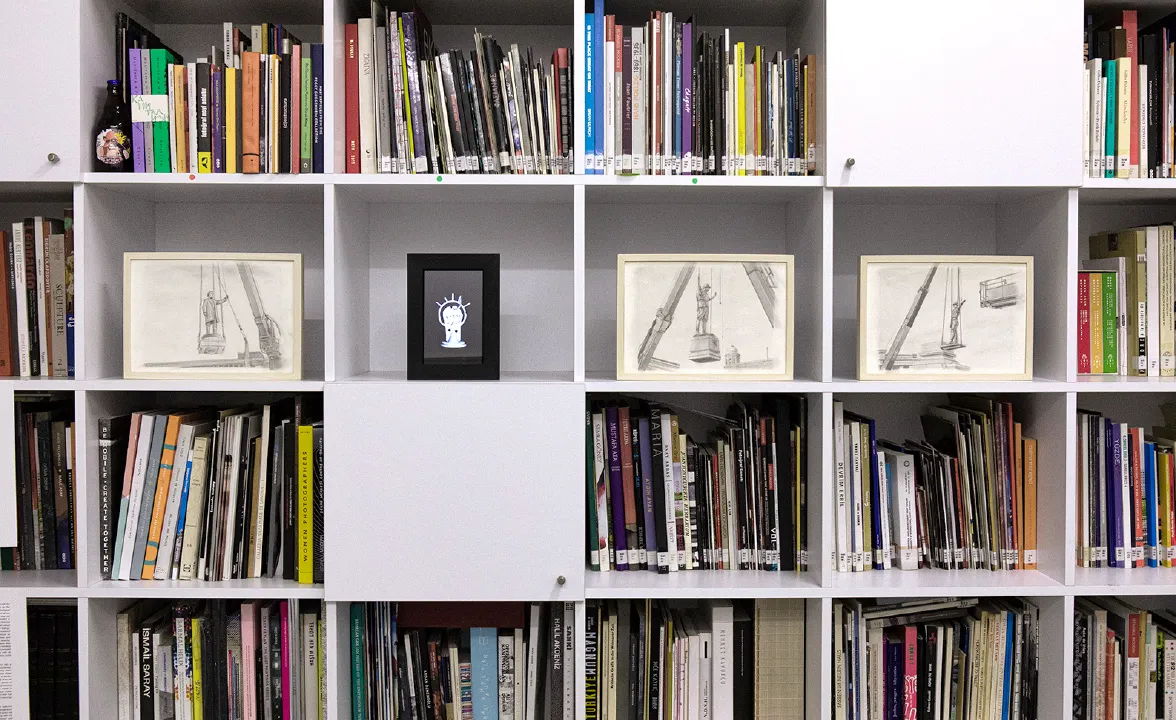
With the difficulty of reading these changes, is it possible to understand and make sense of the world in which the state of anomie persists in the post-truth times? My working practice, which began with this question, has led him to produce different series in an effort to show the differences between cultural codes, and also tries to examine the gap between grand narratives and the semiotic visuals that determine the way we communicate on a daily basis, inspired by the conflicts created by these codes.